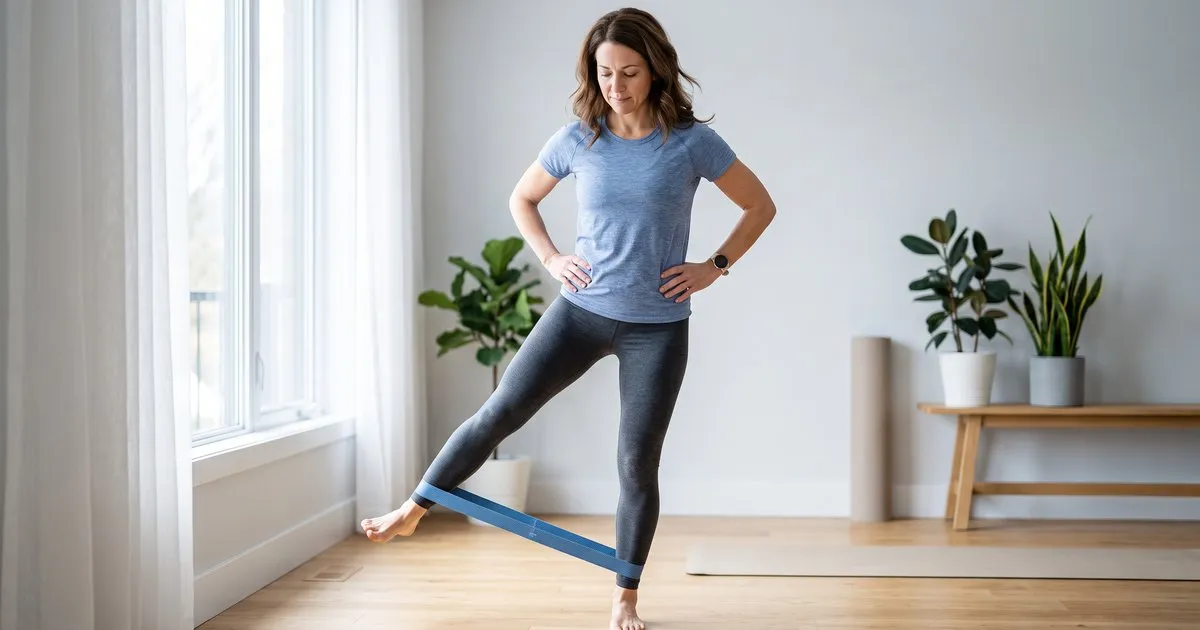
Short answer: if your groin hurts when you walk or put on socks and you want to know which exercises you can do for hip osteoarthritis, the answer is that moving is good for you, with exercises adjusted to your pain, and that there is no universal list of forbidden exercises [2][3]. The main rheumatology societies in the world agree that guided exercise is the foundation of management, along with education about the disease [2][3] and weight loss if you are overweight [1][3]. And if that is not enough for you, at CELAVYX, in Bogotá, a specialist reviews your case and tells you what other option makes sense for you.
In this article we tell you which exercises do help, which ones you should adjust or avoid, how we support hip osteoarthritis at CELAVYX, and when it is worth seeking a consultation.
What hip osteoarthritis is and why it hurts
Osteoarthritis is a degenerative joint disease: the tissues that make up the joint deteriorate over time. It is the most common type of arthritis. It is not simply due to wear and tear; changes in the tissue itself trigger the deterioration, which is usually gradual [4].
In the hip, pain and stiffness can be felt in the joint, in the groin, in the inner thigh, or in the buttocks, and sometimes radiate toward the knee. Over the years, some people notice that they can no longer move the hip as much as before [4]. If you want to review how it is recognized and diagnosed, see the page on hip osteoarthritis. And if you are interested in PRP for another joint, read what recovery after knee PRP is like.
How we support hip osteoarthritis at CELAVYX
When exercise, weight control, and the medications your doctor prescribed are not enough, at CELAVYX Bogotá you have the CELAVYX ORTHO program, designed to support painful joints. One of its tools is joint platelet-rich plasma (PRP). Put simply: a sample of your own blood is taken, processed to concentrate the platelets, and that plasma is applied inside the joint.
It is considered mainly for people with hip osteoarthritis who already exercise and still have pain. The authors of a review on PRP in the hip propose it for people with early-stage osteoarthritis, in whom surgery is not yet indicated [5]. Even so, who is a candidate is decided by the specialist, not by a general rule.
The process has three stages. First, the assessment: a specialist reviews your history, examines your hip, and looks at any studies you already have, to determine whether the joint is the source of the pain and whether this option is right for you. Second, if it is, the application, which is done in the office. Third, follow-up: we see how you respond and adjust the plan. Everything is combined with your exercise and with what you were already prescribed; it does not replace it.
What has been seen in people? A systematic review with meta-analysis of 8 studies and 331 patients with hip osteoarthritis found that, after the PRP injection, pain decreased compared with before, with the greatest effect between the first and second month, and that there were no lasting adverse effects [5]. Another review, of 4 trials with 334 participants, concluded that PRP can be beneficial and safe in the hip in the medium term [6].
It is an option that is still being studied: more good-quality studies are still needed to know who benefits most and with which protocol [7]. That is why a specialist first reviews whether it is right for you.
If you have hip osteoarthritis and exercise is not enough, schedule your assessment in Bogotá and we will tell you whether this therapy is right for you.
Exercises for hip osteoarthritis: which ones to do
The guidelines talk about types of programs more than individual movements. The first is structured land-based exercise, which the guideline of the international osteoarthritis society (OARSI) places as a core treatment for the hip, along with education about the disease [2]. The European society of rheumatology (EULAR) asks that exercise have the dose and progression well adjusted to each person [3]. That means starting gently, increasing little by little, and adapting the movements to your pain. Your physical therapist or your doctor will put together the specific routine according to your case; we also discuss it in the assessment.
The American College of Rheumatology strongly recommends exercise, weight loss if you are overweight, self-management programs, tai chi, and the use of a cane. It conditionally recommends balance exercises and yoga [1]. EULAR adds appropriate footwear and walking aids within basic management [3].
And what about exercise in water? A Cochrane review in people with knee or hip osteoarthritis found small, short-term improvements in pain, disability, and quality of life, with no serious adverse events related to aquatic exercise [10]. The OARSI guideline does not include it among those recommended for the hip [2]. If water is what feels most comfortable for you, talk with your doctor or physical therapist.
On how much exercise helps: it reduces pain and improves function modestly [9]. It does not make osteoarthritis disappear, which is why it is combined with the other measures.
Which exercises should you avoid with hip osteoarthritis?
The guidelines we reviewed do not include a list of forbidden exercises. What they ask for is to adjust the dose and progression to each person [2][3]. In practice, the signal to stop or change an exercise is your own pain: in trials of hip exercise, the few adverse events reported were increases in pain attributed to the program [9]. If a movement triggers your pain or the pain does not go down after a while, tell your doctor or physical therapist so it can be adjusted.
Something similar happens with high impact. A review of studies in runners found that recreational running was not associated with more hip or knee osteoarthritis, while high, sustained volume or intensity was. The authors clarify that it cannot be known whether that relationship is causal [11]. That work speaks about the risk of developing osteoarthritis, not about what to do when you already have it, so if you run or play impact sports, bring it up at your assessment.
Weight, footwear, and education: what goes along with exercise
Weight is part of the plan: the American College of Rheumatology strongly recommends losing it when there is excess weight [1], and EULAR includes maintaining a healthy weight, footwear, and techniques for changing habits [3].
Understanding your disease also counts. In a Swedish registry of 55,059 people with hip or knee osteoarthritis who completed a three-month education and exercise program, compared with those who always wanted surgery, those who stopped wanting it after the program had a 20% lower likelihood of surgery at five years. Because everyone completed the program, the study cannot tell how much of that result is due to the program itself [12].
When to seek a consultation for hip osteoarthritis
See a doctor if groin, thigh, or buttock pain lasts for weeks, if stiffness limits what you do every day, if it is increasingly hard to move your hip, if the joint feels loose or unstable, or if the pain wakes you at night [4]. Also if you already exercise and the pain does not improve. An assessment can confirm that the hip is the source, since its pain can radiate to the knee [4], see how much it is affected, and adjust the plan.
Frequently asked questions
Can you exercise with hip osteoarthritis?
Yes. Exercise is part of the management recommended by the American College of Rheumatology, OARSI, and EULAR [1][2][3]. The important thing is to adjust it to your pain and increase little by little.
Which exercises are forbidden with hip osteoarthritis?
The guidelines do not include a list of forbidden exercises; they recommend a program with dose and progression adjusted to each person [2][3]. Which movements suit you is defined by your doctor or physical therapist according to your case.
Does running make hip osteoarthritis worse?
In people without osteoarthritis, recreational running was not associated with more osteoarthritis, while high, sustained volume or intensity was [11]. If you already have osteoarthritis, that is decided with your doctor according to your case.
How do I know if a therapy is right for me?
It is not decided by the name of the therapy, but by your case: how much it hurts, how much the joint is affected, what you have tried, and what treatments you already have. In the assessment, a specialist reviews your case and tells you which option makes sense for you.
Does PRP replace exercise or what my doctor prescribed?
No. At CELAVYX it is combined with your exercise and with the management you already follow. The guidelines place exercise as the foundation of hip management [2][3], and that does not change.
What is the assessment at CELAVYX like and how many sessions do I need?
You have a consultation in Bogotá in which a specialist reviews your history, examines your hip, and looks at the studies you bring. How many applications you need, if you need any, depends on your case and is defined after that assessment.
Take the next step with the CELAVYX team
Hip osteoarthritis is best managed with a plan tailored to you: adjusted exercise, weight control, and, if needed, an option such as joint PRP. At CELAVYX Bogotá we review your case and tell you what makes sense for you. Schedule your assessment, or learn how it works.
This content is for informational purposes and does not replace consultation with a health professional.
Sources
- [1] Kolasinski SL et al. 2019 American College of Rheumatology/Arthritis Foundation Guideline for the Management of Osteoarthritis of the Hand, Hip, and Knee. Arthritis Care Res (Hoboken). 2020;72(2):149-162. PMID: 31908149. DOI: 10.1002/acr.24131. Link: https://pubmed.ncbi.nlm.nih.gov/31908149/
- [2] Bannuru RR et al. OARSI guidelines for the non-surgical management of knee, hip, and polyarticular osteoarthritis. Osteoarthritis Cartilage. 2019;27(11):1578-1589. PMID: 31278997. DOI: 10.1016/j.joca.2019.06.011. Link: https://pubmed.ncbi.nlm.nih.gov/31278997/
- [3] Moseng T et al. EULAR recommendations for the non-pharmacological core management of hip and knee osteoarthritis: 2023 update. Ann Rheum Dis. 2024;83(6):730-740. PMID: 38212040. DOI: 10.1136/ard-2023-225041. Link: https://pubmed.ncbi.nlm.nih.gov/38212040/
- [4] NIAMS (NIH). Osteoarthritis Symptoms, Causes & Risk Factors. Last reviewed: September 2023. Accessed 2026-11-03. Link: https://www.niams.nih.gov/health-topics/osteoarthritis
- [5] Lim A et al. The Use of Intra-articular Platelet-Rich Plasma as a Therapeutic Intervention for Hip Osteoarthritis: A Systematic Review and Meta-analysis. Am J Sports Med. 2023;51(9):2487-2497. PMID: 35971803. DOI: 10.1177/03635465221095563. Link: https://pubmed.ncbi.nlm.nih.gov/35971803/
- [6] Medina-Porqueres I et al. Effectiveness of platelet-rich plasma in the management of hip osteoarthritis: a systematic review and meta-analysis. Clin Rheumatol. 2021;40(1):53-64. PMID: 32607659. DOI: 10.1007/s10067-020-05241-x. Link: https://pubmed.ncbi.nlm.nih.gov/32607659/
- [7] Bennell KL et al. Platelet-Rich Plasma for the Management of Hip and Knee Osteoarthritis. Curr Rheumatol Rep. 2017;19(5):24. PMID: 28386761. DOI: 10.1007/s11926-017-0652-x. Link: https://pubmed.ncbi.nlm.nih.gov/28386761/
- [8] Hall M et al. Exercise for osteoarthritis of the hip. Cochrane Database Syst Rev. 2026;7(7):CD007912. PMID: 42486497. DOI: 10.1002/14651858.CD007912.pub3. Link: https://pubmed.ncbi.nlm.nih.gov/42486497/
- [9] Fransen M et al. Exercise for osteoarthritis of the hip. Cochrane Database Syst Rev. 2014;2014(4):CD007912. PMID: 24756895. DOI: 10.1002/14651858.CD007912.pub2. Link: https://pubmed.ncbi.nlm.nih.gov/24756895/
- [10] Bartels EM et al. Aquatic exercise for the treatment of knee and hip osteoarthritis. Cochrane Database Syst Rev. 2016;3(3):CD005523. PMID: 27007113. DOI: 10.1002/14651858.CD005523.pub3. Link: https://pubmed.ncbi.nlm.nih.gov/27007113/
- [11] Alentorn-Geli E et al. The Association of Recreational and Competitive Running With Hip and Knee Osteoarthritis: A Systematic Review and Meta-analysis. J Orthop Sports Phys Ther. 2017;47(6):373-390. PMID: 28504066. DOI: 10.2519/jospt.2017.7137. Link: https://pubmed.ncbi.nlm.nih.gov/28504066/
- [12] Lawford BJ et al. Change in willingness for surgery and risk of joint replacement after an education and exercise program for hip/knee osteoarthritis: A longitudinal cohort study of 55,059 people. PLoS Med. 2025;22(5):e1004577. PMID: 40338890. DOI: 10.1371/journal.pmed.1004577. Link: https://pubmed.ncbi.nlm.nih.gov/40338890/