Book your assessment Message us on WhatsApp
Locations in Bogotá and Buenos Aires
Assessment with a specialist
Our own laboratory with batch-by-batch quality control
No promises: we explain what to expect
—What it is
A concentrate from your own blood
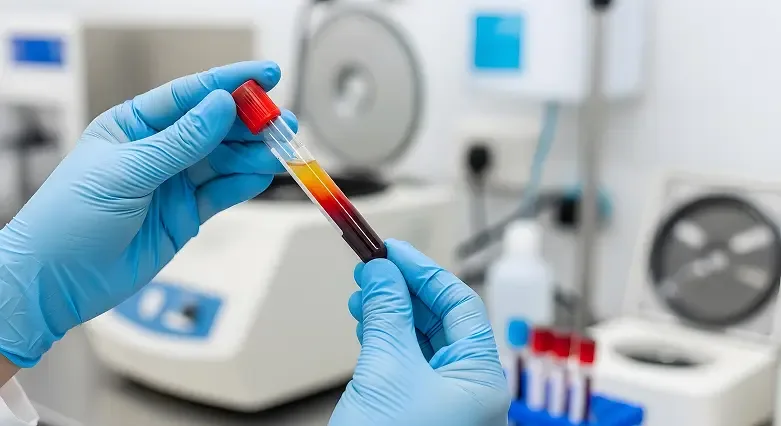
Platelet-rich plasma, or PRP, is obtained from the patient’s own blood. A sample is taken, separated in a centrifuge, and the plasma fraction containing platelets and the growth factors involved in the body’s natural repair processes is concentrated. That concentrate is applied where the tissue needs it.
It’s autologous, meaning it comes from the patient, which reduces the risk of rejection. We apply it at our locations in Bogotá and Buenos Aires.
—When it's used
Where PRP has the most support
The best-documented use is in orthopedics, especially in joints with wear or soft-tissue injury.
Knee and hip osteoarthritis
In stages where there’s still cartilage to preserve.
Tendon and ligament injuries
That don’t fully resolve with conservative management.
Persistent joint pain
That has already gone through physical therapy and anti-inflammatories without enough improvement.
Facial and hair aesthetics
As skin biostimulation and support for hair loss.
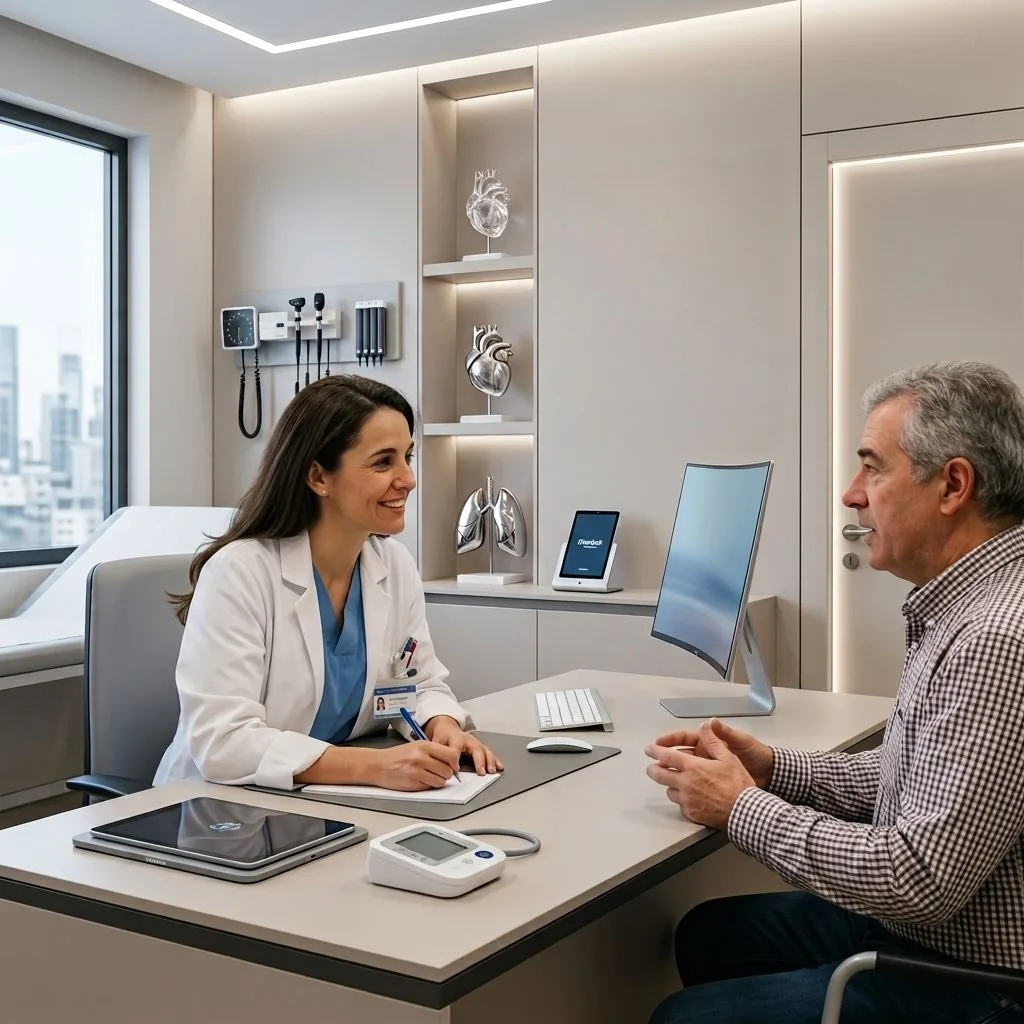
Not every case is a candidate. The specialist determines the indication after reviewing imaging, how long the condition has evolved and the patient’s general health. Cartilage that has already disappeared can’t be recovered with PRP.
—What the procedure is like
Outpatient, in a single visit
1
Sample collection
A blood sample is taken, as in any lab test.
2
Processing
The sample is processed in a centrifuge to separate and concentrate the platelet-rich plasma.
3
Application
The concentrate is applied to the indicated area, with ultrasound guidance when the case requires it.
4
Going home
The patient walks out the same day, with instructions for relative rest.
—Sessions
How many sessions are needed
It depends on the condition and on each patient’s response. For joints, schedules of several spaced applications are usually planned, and results aren’t assessed immediately: the effect sought is biological, not analgesic, and it takes weeks.
—What the evidence says
The most studied regenerative therapy
Within regenerative medicine, PRP is the therapy with the most published literature, particularly in knee osteoarthritis. The available evidence is favorable for pain control and function in certain patient profiles, while there is still variability between studies due to differences in how the product is prepared and the application protocols.
That’s why we work with a defined protocol: if the product isn’t consistent, the result isn’t either.
What it doesn’t do: it doesn’t regenerate cartilage that has been completely lost, it doesn’t replace surgery when surgery is indicated, and it doesn’t work the same in every patient. When a case isn’t a candidate, we say so in the assessment.
—How we work
Rigor in every preparation
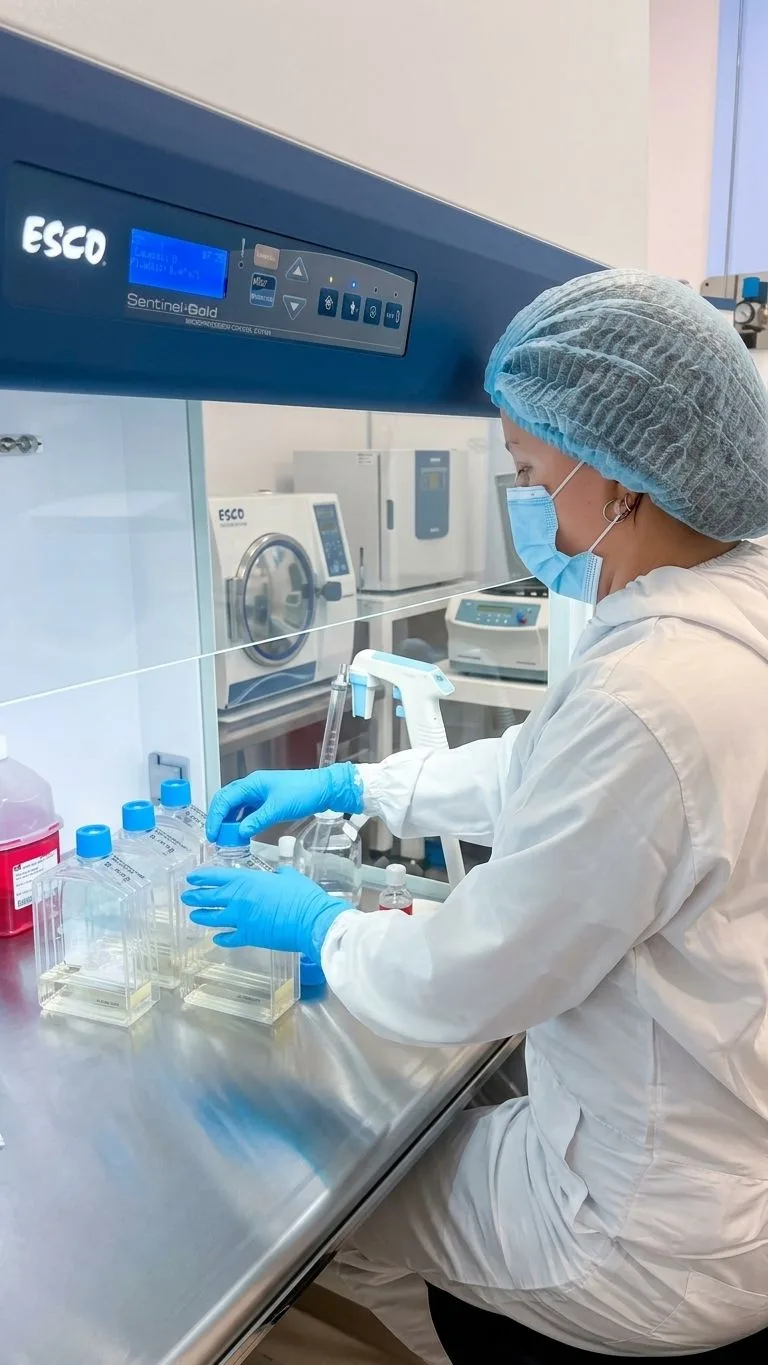
At CELAVYX we work with our own laboratory and batch-level quality control. Each preparation has its own record of identity, purity, safety and traceability, and that record is available to the patient and their doctor.
In Colombia, the regulatory framework is set by INVIMA.
Is PRP right for your case?
An assessment with a specialist defines it.
—Frequently asked questions
What people ask us most
Does platelet-rich plasma hurt?
The blood draw is like any lab test. The application causes discomfort at the moment and may leave a feeling of heaviness or mild swelling in the following hours.
How much does platelet-rich plasma cost?
The cost depends on the joint, the number of sessions and the protocol the specialist defines. It’s explained during the assessment.
Does it have risks or side effects?
Since it’s a product derived from the patient’s own blood, the risk of reaction is low. The most common effects are local and temporary: pain, swelling or redness at the application site.
How long does it take to work?
It’s not a painkiller: the effect sought is biological and is assessed over weeks, not days.
Can I go back to my normal activities the same day?
Yes, with relative rest. Avoid intense effort on the treated area for the first few days.
Want to go deeper? Read our guides (in Spanish) Recovery after PRP in the knee, Androgenetic alopecia and Non-surgical facial rejuvenation.
—The first step
The first step is the assessment
If you have joint pain or an injury that won’t resolve, an assessment defines whether PRP is the right option for your case, or whether another alternative is. Tell us about your case and we’ll contact you to schedule it in Bogotá or Buenos Aires.
- We tell you clearly whether you’re a candidate, and if you’re not.
- If you have imaging studies, we review them during the consultation.